

 macOS
 Windows
 Linux
 Android
 Chrome extension
 Slack app


Tools People already uses.
The HRIS, the applicant tracker and the handbook already on file.


An offer, a first day, and a process already in motion.
Noah’s day-one list, a draft offer from Friday’s debrief, Iris’s interviews so far. Each answer walks the current file.
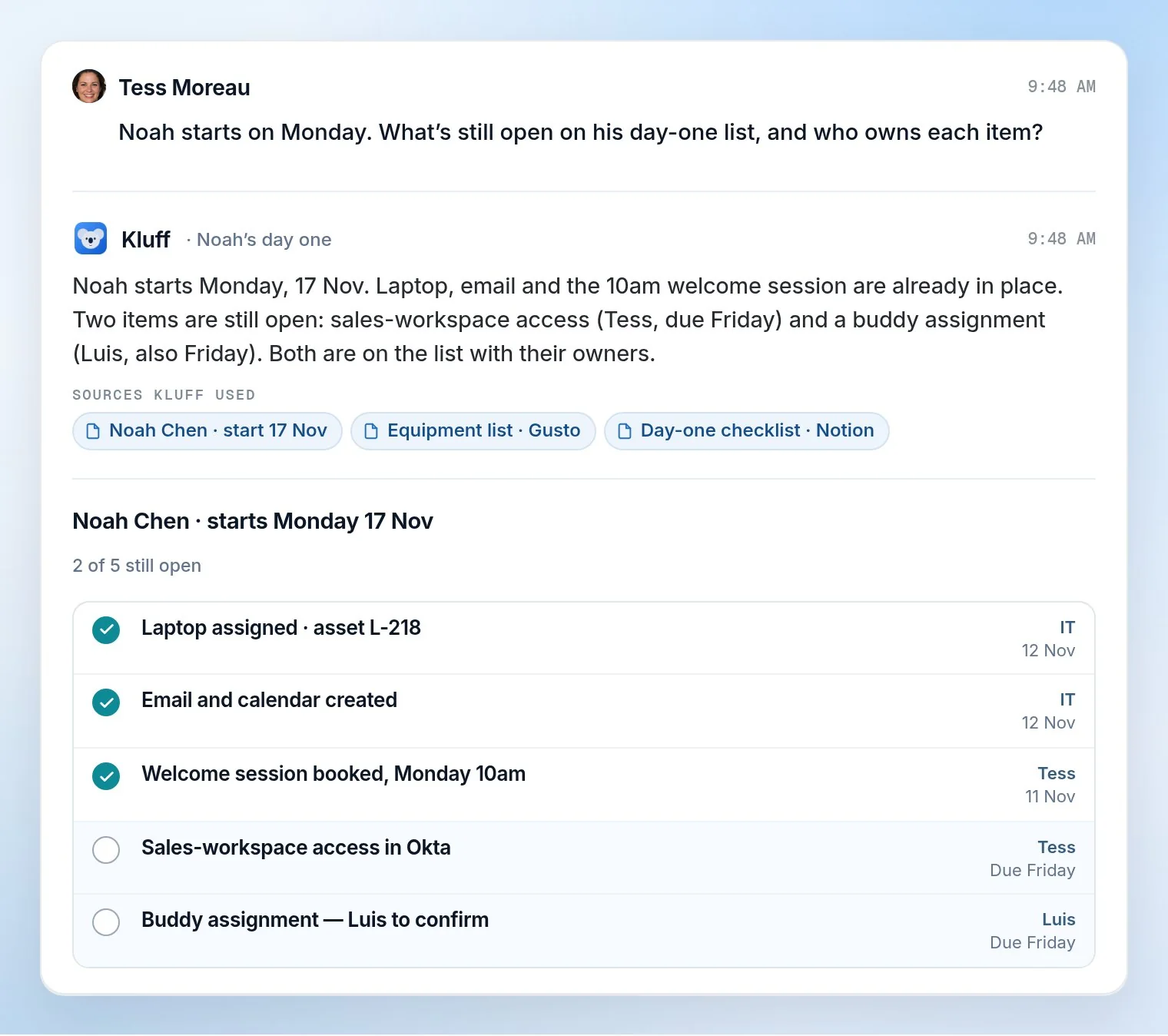
Noah starts on Monday. What’s still open on his day-one list, and who owns each item?
Laptop, email and the welcome session are done. Access to the sales workspace and a buddy assignment are still open — Tess and Luis own them, both due before Monday.
Answered from Noah’s start-date record, the equipment list, and the day-one checklist.
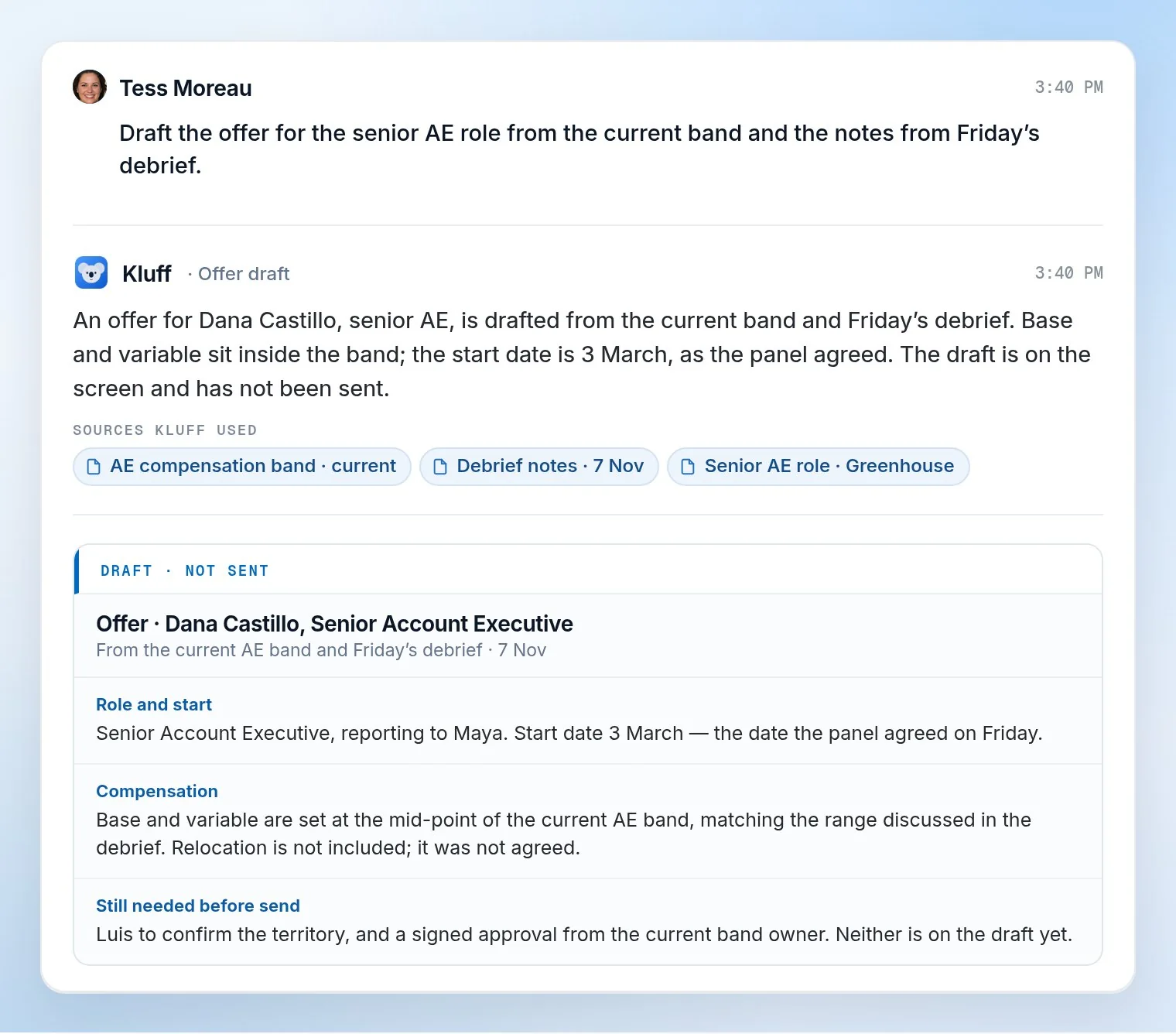
Draft the offer for the senior AE role from the current band and the notes from Friday’s debrief.
The draft uses the current AE band and Friday’s debrief — base, variable and a 3 March start, which is what the panel agreed. It hasn’t been sent.
Answered from the current AE band, Friday’s debrief notes, and the senior AE role file.
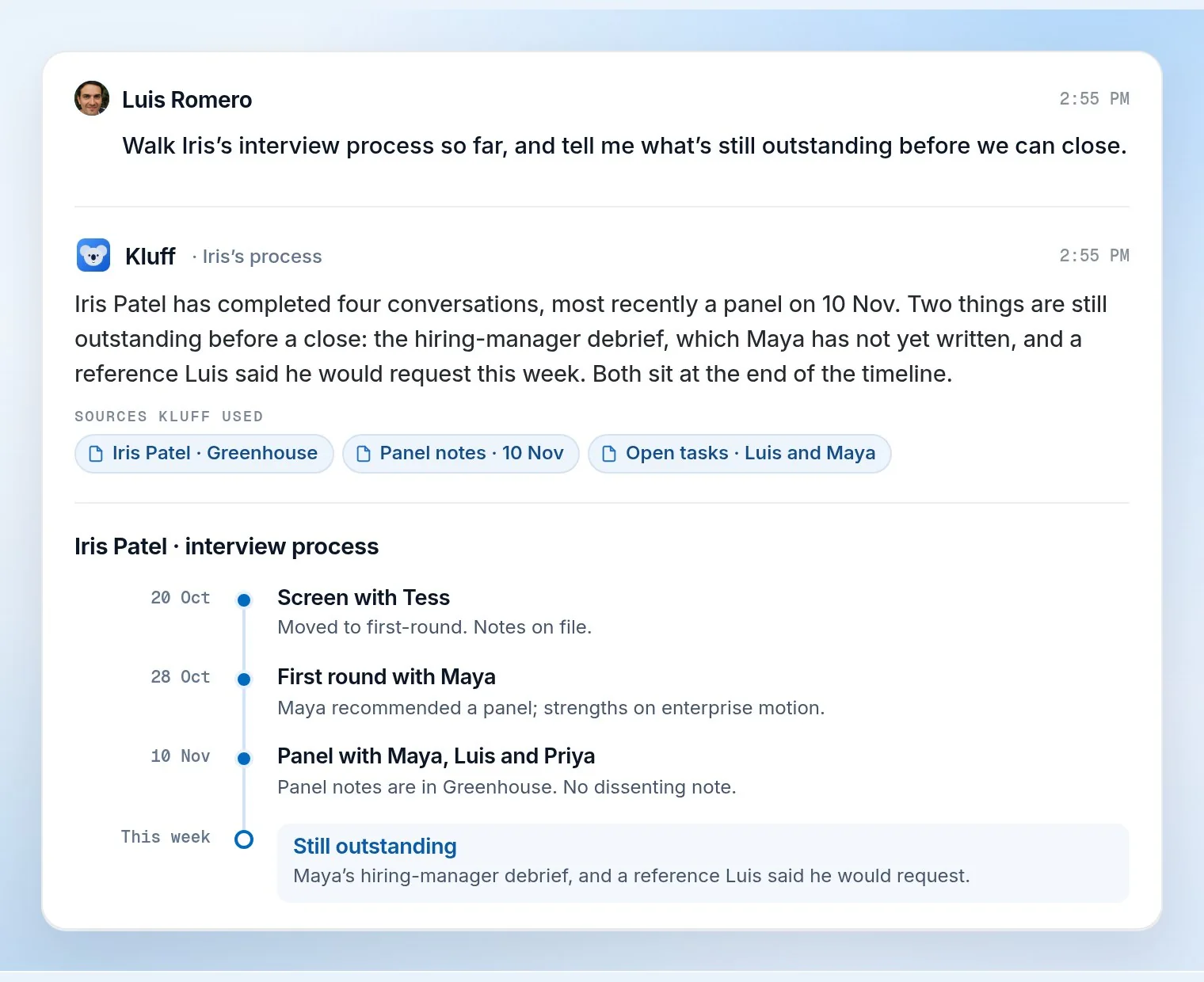
Walk Iris’s interview process so far, and tell me what’s still outstanding before we can close.
Four conversations are already on the file. What’s still outstanding is a hiring-manager debrief and a reference Luis said he would request this week.
Answered from Iris’s Greenhouse file, the interview notes, and the open-task list.
What Kluff knows about your People team
People, policies, start dates and the HR tools already in use — held together so a leave question and a day-one checklist draw on the same file.

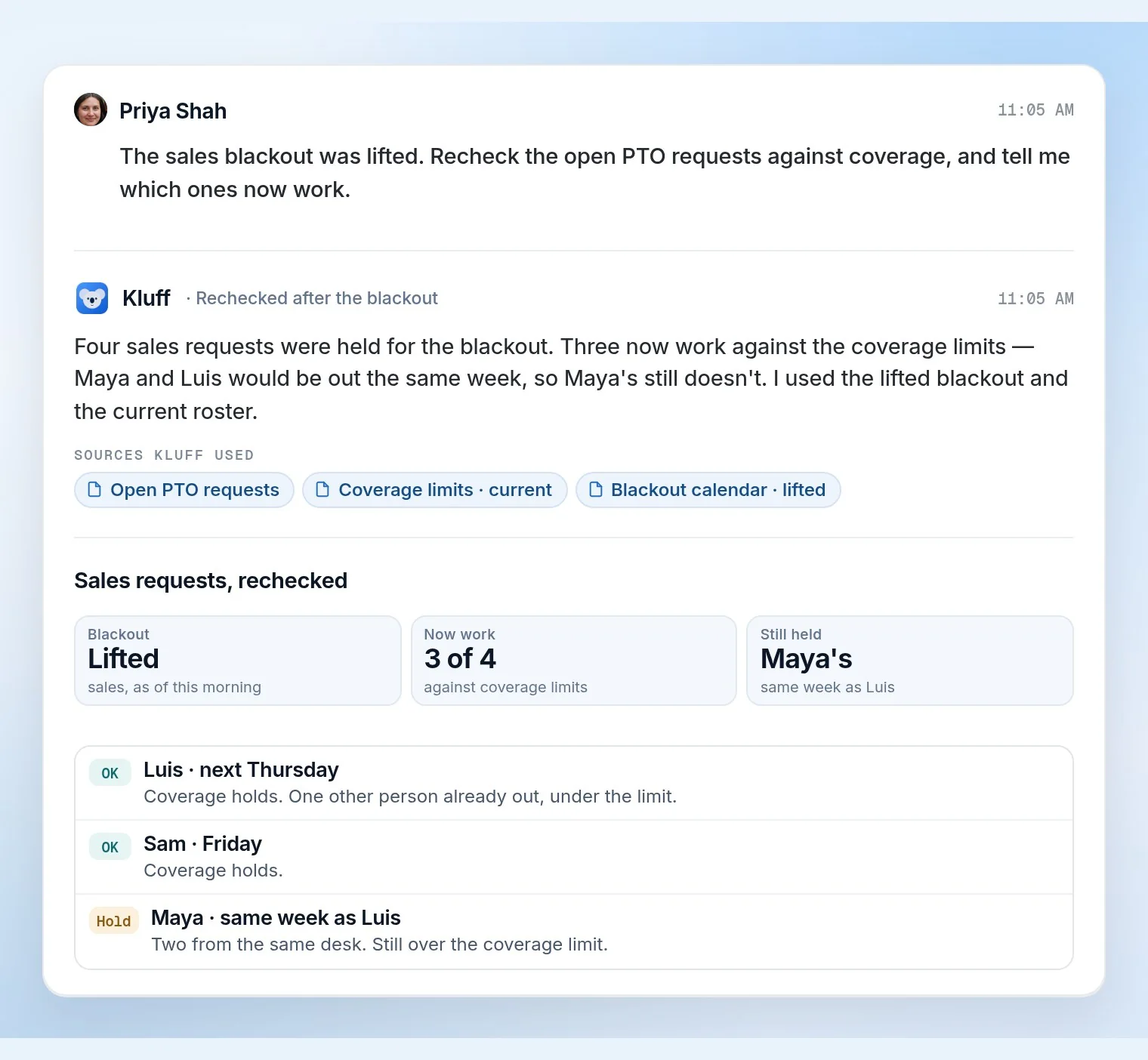
The sales blackout was lifted. Recheck the open PTO requests against coverage, and tell me which ones now work.
AI agents for HR and people teams
HR agents use people policies, records and connected tools to support employee service and administrative tasks. Kluff agents can summarize policy guidance, prepare onboarding checklists and organize open requests. People teams remain responsible for interpreting policy and making employment decisions.
AI agents can help organize employee questions, onboarding tasks, policy lookups and recruiting correspondence. Kluff agents use accessible documents and connected records to prepare summaries or carry out supported tasks. Teams should define what information is needed and who reviews sensitive or exceptional cases.
Kluff agents can prepare answers from accessible handbook, leave and benefits documents. The answer can identify the source policy so the people team can check its wording and applicability. Where policies conflict or a case requires interpretation, an HR specialist should review the response.
Kluff agents can compare start dates, equipment availability and onboarding checklists to identify outstanding tasks. They can summarize who is ready for day one and where information is missing. Changes to accounts or HR systems depend on the connected tools and their supported actions.
Kluff agents can compare available requests with policy, staffing and coverage records to prepare a review summary. If a blackout period or start date changes, an agent can revisit the affected records. Managers and HR owners decide whether to approve a request.
Kluff agents can summarize requirements and plan information from accessible benefits documents and employee records relevant to the task. The people team should confirm eligibility, rates and effective dates against authoritative plan information before communicating an individual benefit determination.
Kluff agents can organize role documents, summarize candidate correspondence and identify follow-ups or missing information. This gives recruiters a clearer record to review. Hiring teams remain responsible for evaluating applicants and making selection decisions using their established process.
Give an agent only the records and connected accounts needed for its task. In Kluff, available information depends on workspace access and connection configuration. HR teams should review membership, shared connections and document access before using an agent with sensitive employee information.
Kluff works with accessible records and connected systems to help with HR workflows. An HRIS remains a system of record, and the people team owns policy interpretation, employee relations and employment decisions. An agent’s summary should be checked against the authoritative record when the outcome matters.
Begin with a task such as finding policy references or preparing an onboarding checklist. Add the current documents, connect only the necessary sources and review the output with the people team. Refine the instructions and exception handling before expanding to workflows involving individual employee records.